
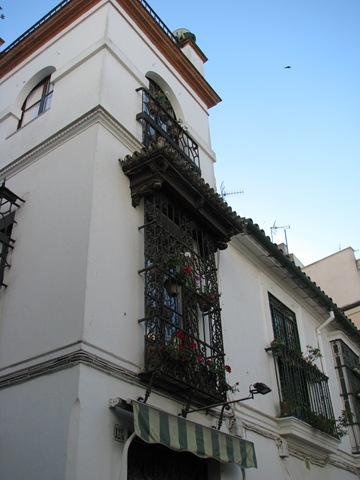

The Jew Borough, of Seville, Spain.
O Bairro Judeu de Sevilha, Espanha.
The Jew Borough, of Seville, Spain.
O Bairro Judeu de Sevilha, Espanha.


I can't give you, the most luxurious place in the world for marriage.
Não te posso dar o lugar mais luxuoso do mundo para o casamento.
The hard life in the Mexican beaches. Hotel Paradisus Riviera Maya.
A vida dura, nas praias mexicanas. Hotel Paradisus Riviera Maya.


A miniature of the Eiffel Tower, but at Hotel Paradisus Riviera Maya, Mexico, near the French restaurant.
Uma miniatura da Torre Eiffel, mas no Hotel Paradisus Riviera Maya, no México, junto ao restaurante Francês.
The Counters. And the incredible sense of security that has close it. Well, everything seems to be under control.
Os Contadores. E a incrível sensação de segurança que se tem perto disto. Bem, tudo parece estar sob controle.
One cenote near Chichen Itza.
Um cenote perto de Chichen Itza.


Norteinho | Funny But... | Look the Photo
Sacred Well (Cenote)
Poço Sagrado (Cenote)


Cenotes are surface connections to subterranean water bodies [1]. While the most well-known cenotes are large open water pools measuring tens of metres in diameter, such as those at Chichén Itzá, the greatest number of cenotes are smaller sheltered sites and do not necessarily have any surface exposed water. The term cenote has also been used to describe similar karst features in other countries such as Cuba and Australia, in addition to the more generic term of sinkholes.
Cenote water is often very clear, as the water comes from rain water infiltrating slowly through the ground, and therefore contains very little suspended particulate matter. The groundwater flow rate within a cenote may be very slow at velocities ranging from 1 to 1000 meters per year. In many cases, cenotes are areas where sections of cave roof have collapsed revealing an underlying cave system and the water flow rates here may be much faster: up to 10,000 meters per day[2]. Cenotes around the world attract cave divers who have documented extensive flooded cave systems through them, some of which have been explored for lengths of 100 kilometers or more.
Cenotes have long been the principal sources of water in much of the Yucatán Peninsula. The region has almost no rivers and only a few lakes, often marshy. Cenotes are widely distributed, and supply better-quality water year-round. Major Maya settlements required access to adequate water supplies, and therefore cities, including the famous Chichén Itzá, were built around these natural wells. Some cenotes like the Cenote of Sacrifice in Chichén Itzá played an important role in Maya rites. Believing that these pools were gateways to the other world, the Maya sometimes threw valuable items into them. The discovery of golden sacrificial artifacts in some cenotes led to the archaeological exploration of most cenotes in the first part of the 20th century. Edward Herbert Thompson, an American diplomat who had bought the Chichén Itzá site, began dredging the Sacred Cenote there in 1904. He discovered human skeletons and sacrificial objects confirming a local legend, the Cult of the Cenote, involving human sacrifice to the rain gods (Chaacs) by ritual casting of victims and objects into the cenote.
Font: Wikipédia.The Warriors Temple.
O Templo dos Guerreiros.

Chichen Itza - 06
Norteinho | Funny But... | Look the Photo
The Warriors Temple.
O Templo dos Guerreiros.


The Temple of the Warriors complex consists of a large stepped pyramid fronted and flanked by rows of carved columns depicting warriors. This complex is analogous to Temple B at the Toltec capital of Tula, and indicates some form of cultural contact between the two regions. The one at Chichen Itza, however, was constructed on a larger scale. At the top of the stairway on the pyramid’s summit (and leading towards the entrance of the pyramid’s temple) is a Chac Mool.
Near the Warriors is a large plaza surrounded by pillars called "The Great Market."
In Wikipedia.
The Sculpture of tolerance, and the kids and some adults skating, in the side of the river, in the center of Seville, Spain.
A escultura da Tolerância, e crianças e adultos a patinar, ao lado do rio, no centro de Sevilha, Espanha.
Map.
El Caracol. (The Snail) Part 2 (Part 1)
Was an astronomical observatory.
O Caracol.
Era um observatório astronómico.


Related: Chichen Itza - 01 | Chichen Itza - 02 | Chichen Itza - 03
| Chichen Itza 04
If you need air, you can pump a tire in the streets of Stockholm.
Se precisas de ar, podes encher pneus, nas ruas de Estocolmo.
El Caracol. (The Snail)
Was an astronomical observatory.
O Caracol.
Era um observatório astronómico.


Norteinho | Funny But... | Look the Photo


